A Theatre Built in 1886, and the Story That Has Persisted in Its Programme Notes
The Princess Theatre in Melbourne has been repeating one story for over a century — the night a baritone collapsed mid-performance and never left.
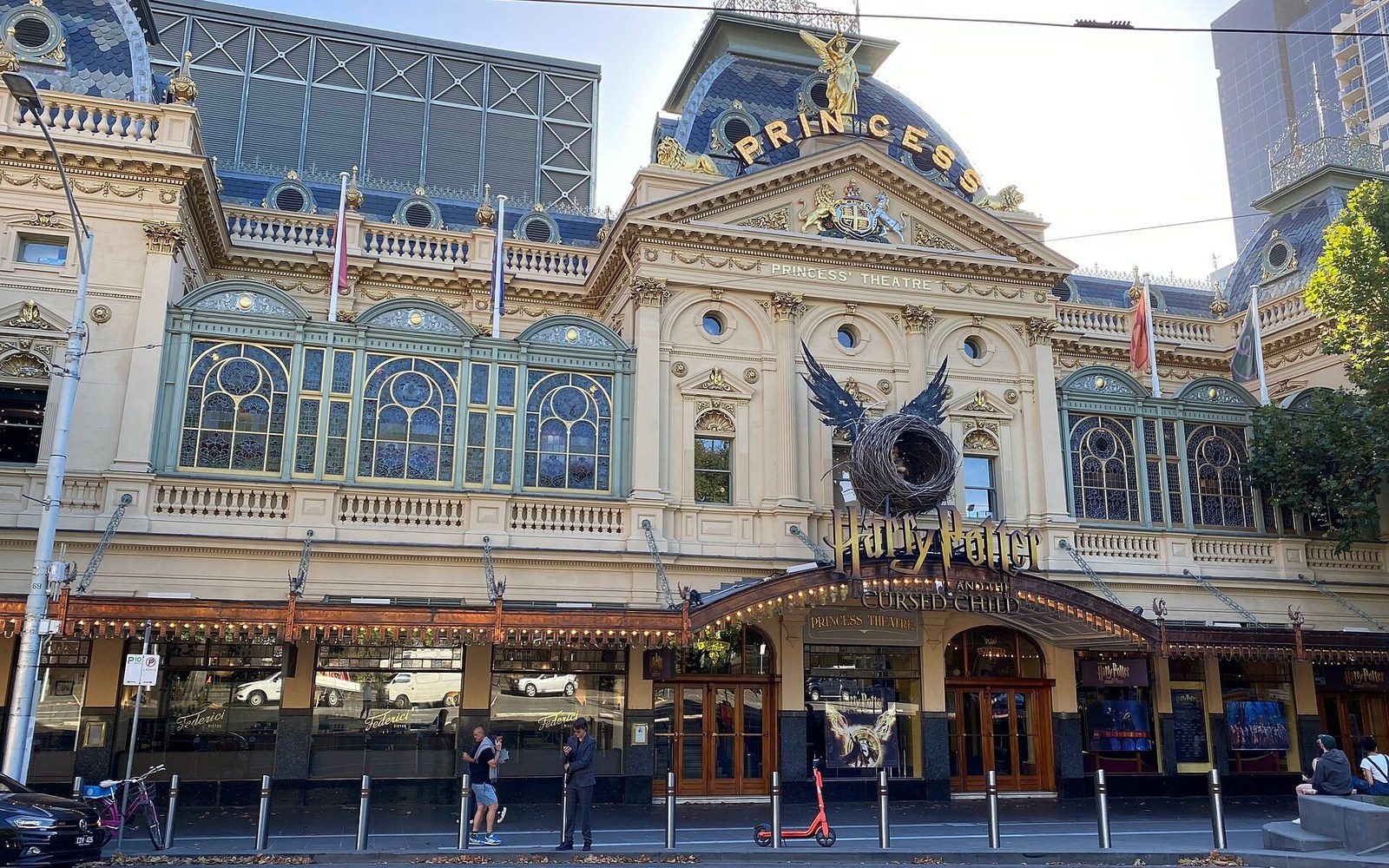
Frederick Baker Federici and the Night of 3 March 1888
The Princess Theatre on Spring Street, Melbourne, opened in 1886 as one of the most lavishly appointed venues in colonial Australia. Its horseshoe auditorium, ornate plasterwork and gas-lit chandeliers were designed to rival London's West End houses, and the building survives today largely intact — heritage-listed under the Victorian Heritage Register as a rare example of late Victorian theatre architecture in the southern hemisphere.
The event the theatre has traded on since almost the moment it occurred took place on 3 March 1888, during a production of Gounod's Faust. The baritone Frederick Baker Federici was singing the role of Mephistopheles — the devil — when he collapsed during the final scene, in which the character descends through a stage trapdoor. He was carried to a dressing room and died shortly afterwards, the cause recorded as heart failure. Melbourne newspapers including The Argus reported the death the following morning, noting the grim theatre of the circumstances: the devil's actor, dying at the moment of his character's descent.
What followed the factual event is where documented history shades into promoted legend. Within weeks of Federici's death, accounts began circulating — reported in the press rather than generated by the theatre — that cast members had seen him take his bow at the curtain call after he had already been pronounced dead backstage. The claim was striking enough to attract repeated newspaper attention across the following decades, each retelling adding texture that the original reports did not contain.
How a Publicity Asset Persists
The Princess Theatre's own published materials have returned to the Federici story consistently across its operating life. Theatre programmes, souvenir histories and, in more recent decades, the venue's own website have all repeated the account of the post-mortem bow, typically framing it as a story "said to have" occurred or attributed to the recollections of unnamed cast members. That careful hedging — the "said to have" — distinguishes the theatre's approach from outright assertion while keeping the story in active circulation.
This pattern is recognisable across Australian heritage venues. A documented event, unusual or tragic, acquires anecdotal elaborations shortly after the fact; those elaborations are reported in the press; the venue incorporates the press reports into its own narrative; and the compound version is then treated as the established account. The Princess Theatre's version of this process is one of the more transparent examples, because the 1888 newspaper record is accessible and the gap between what those papers reported and what the later publicity says is measurable. The National Library's Trove platform ↗ and its digitised newspaper holdings illustrate how searchable colonial-era press makes exactly this kind of comparison possible.
The theatre has never formally marketed itself as a ghost-tour destination in the manner of Old Melbourne Gaol's after-dark programme on Russell Street, which operates under a structured ticketing model. Instead, the Princess maintains the Federici story as ambient atmosphere — woven into programme notes and historical summaries rather than sold as a separate after-dark product. Whether that restraint reflects policy, licensing constraints, or simply the economics of a working commercial theatre is not a matter the venue has addressed in its public statements.
The psychological literature on suggestion effects — documented by researchers including Richard Wiseman and Chris French — notes that a primed audience in a theatrically suggestive environment is reliably more likely to report anomalous perceptions. A building designed to produce wonder, in the dark, with a known and well-rehearsed ghost story in the programme notes, is precisely such an environment. The Princess Theatre has operated continuously as a live venue since 1886, which means its story has had well over a century of willing audiences to practise on.
More in Headland