Haunting: Australia Ran One Season on Syfy in 2014 and Left a Format Question Behind It
A locally produced paranormal reality series that borrowed a proven format, filmed at real heritage sites, and disappeared after one run.
One Season, Several Heritage Sites, a Familiar Format
Syfy's Australian production arm commissioned Haunting: Australia as a localised entry in the paranormal reality genre that Ghost Hunters — the long-running American series produced by Pilgrim Films & Television for the Syfy channel — had made internationally bankable from 2004 onward. The formula was already well established before the Australian version went to camera: a team of self-described investigators, consumer equipment including EMF meters and full-spectrum cameras, darkened heritage interiors, and a structure in which reported experiences are presented to camera without editorial resolution. The single season of ten episodes aired on Syfy Australia in 2014.
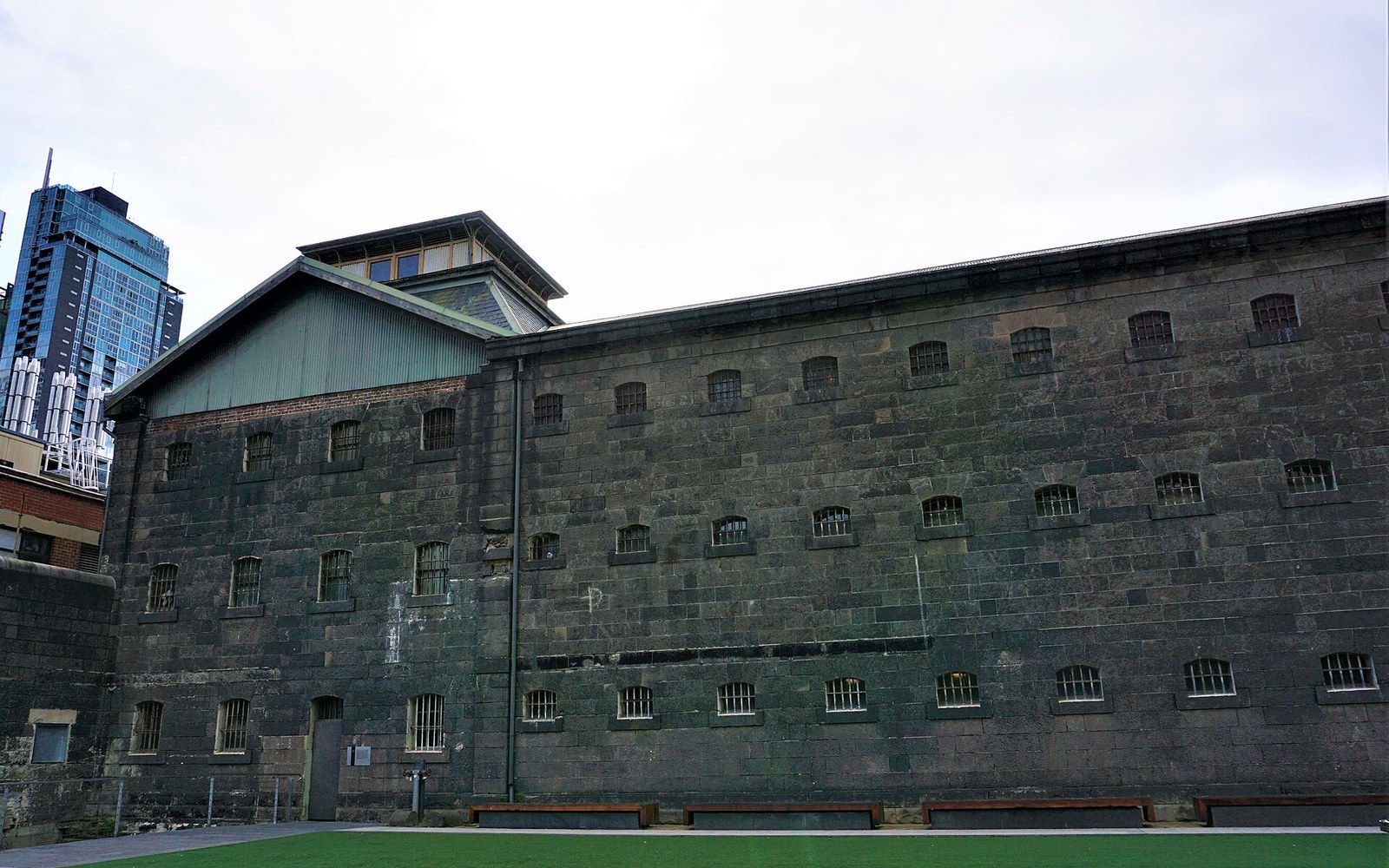
The production assembled a team drawn from Australian paranormal enthusiast circles — a medium, a parapsychologist, a demonologist, and several others — and moved them through a roster of sites with genuine documented histories. Old Melbourne Gaol, the National Trust-managed former prison on Russell Street that has run after-dark programming since the 1990s, appeared in the series, as did the Aradale Mental Health facility at Ararat, which operated as a psychiatric institution from 1867 until its closure. Both sites had pre-existing ghost-tour programmes before the cameras arrived; the television production layered a broadcast format over a commercial heritage product that was already functioning independently.


Several other heritage locations from across Victoria, New South Wales and South Australia featured across the season. The pattern was consistent with how localised Ghost Hunters formats have operated elsewhere: production teams identify sites with established dark-tourism profiles and narrative histories, reducing location-scouting costs and guaranteeing viewer recognition. The heritage site gets broadcast exposure; the production gets a pre-loaded story.
What the Format Economy Looks Like From the Outside
The Ghost Hunters format and its international variants occupy a specific position in broadcast economics. The original American series ran for eleven seasons and spawned licensed or format-inspired productions in the United Kingdom, Germany, and several other territories. Each version follows a structure that Ofcom examined directly in 2005 ↗ when it adjudicated complaints about the British series Most Haunted — finding that the programme's on-screen framing had implied a level of evidential seriousness the format could not support. The Ofcom finding did not shut down the genre; it prompted a shift in how such programmes described themselves, from investigation to entertainment.
Haunting: Australia operated after that adjustment had already been made. The programme's framing positioned the team's activities as experiential rather than scientific, consistent with the post-Ofcom genre convention. Richard Wiseman ↗ and Chris French, the British psychologists whose published research on the suggestion effect documents how participants in primed environments report experiences consistent with prior expectation, have noted that the investigation format itself — darkened spaces, heightened attention, group reinforcement — is precisely the condition most likely to generate reported anomalies regardless of location. Neither researcher has commented on the Australian production specifically.
The series did not return for a second season. Whether that reflects ratings performance, commissioning decisions at Syfy Australia, or the straightforward volatility of locally produced cable content is not a matter of public record. What it left behind is a useful illustration of how the format economy works at its edges: a familiar structure, applied to real places with real histories, broadcast once, then folded. The heritage sites it visited continued operating their own programmes long after the cameras left. Monte Cristo Homestead at Junee, one of the most commercially active independent dark-tourism sites in New South Wales, has outlasted multiple television productions that have filmed there over the decades — the tour product and the broadcast product run on different business logic, and only one of them needs a renewal order to survive.
More in The Prize